Showing posts with label weaknesses. Show all posts

Friday, 23 March 2018

Tension Is Key

Tension Is Key


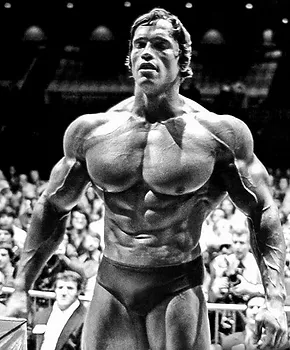
"Bodybuilding is about training muscles, not lifting weights". I think this was said by Arnold. It is a concept that is very misunderstood when you look at the way the average gym goer trains. I don't spend all that often in public gyms but when I do I always walk away scratching my head with some of the things I see. The technique is horrible and people are increasing their risk of injury instead of improving performance and making gains. When you consider most of the people training there just want to look good, or are want to be bodybuilders, then I think they should be focusing on creating as much tension as possible in the working muscles than they currently do.

When doing isolation work, instead of using so much momentum and bringing many muscle groups into play to lift a given weight, you should be focusing on contracting the muscle as hard as possible. You want to make the lift harder, not easier. You can overload a muscle using the same weight each workout as long as you created more tension and contracted it harder from workout 1 to workout 2 for example. You want the target muscle to be doing all the work hence the term "isolation". If you use body motion and momentum to move the weight then you aren't isolating and muscle group. Sure certain muscle groups will fire to support the working muscle but you want to minimise this as much as possible. 

You must also focusing on contracting the target muscle group first. What ever you contract first gets the most stimulus. So if doing curls, you must focus on contracting the biceps first and not the shoulders as is commonly seen. 

Use weights that aren't too heavy to feel the target muscle. This is one of if not the biggest reasons people are unable to feel certain muscle groups when training them. If the weight is too heavy for the muscle you are targeting then other muscle groups are going to kick in to help you lift the weight. As an example, when I do face pulls or a seated row variation, there is a point in which the weight is heavy enough for me to really feel the contraction of my scapula retractors but if i go just slightly over that point I lose the feeling of contraction in those muscles, even though my technique still looks good and I can lift the weight quite comfortably. 

When training isolation exercises or trying to bring up a weak point, tension is the key. If you learn to contract those muscles more efficiently then they will be able to support you during your bigger lifts. It isn't just about moving the weight from point A to point B when bringing up a weak muscle group. You have to focus hard on the target muscle and try to get it to do the majority of the work. Focus on keeping constant tension in that muscle group for the whole set and you will feel a very big difference. You are basically flexing against a resistance. To do this you will have to lift more slowly as too much acceleration will make you lose tension in the muscle. Maybe use a 3131 type tempo when doing a regular biceps curl for example. The transition point is also where a lot of people lose tension so that is why I think it is important to pause at each point the first few sessions you do.

So it doesn't really matter what your goal is. If you just want to look good and are doing some isolation work or if you are an athlete trying to bring up a weak point, you have to focus on creating as much tension, and contracting the target muscle as hard as possible.

Saturday, 10 June 2017

General Preparation for Long Term Gains

General Preparation for Long Term Gains

These day, people want things immediately and skip important steps that would set them up for future success. I see this when it comes to general preparation work in the gym. Most people want to squat, deadlift, bench, and clean big numbers so they jump straight into these lifts, normally at a maximal or near maximal level, trying to improve their numbers, without doing any general preparation work. Their form on most of these lifts suck as well but they never strip their training back to do some work that would correct technical issues, reduce injury risk, and later increase performance. It may be ego, or it may be lack of knowledge. Either way, without building a solid foundation you will struggle to progress as optimally as you could.

With all my athletes I start with a lot of general preparation work. Most don't even squat, deadlift, or bench for the first 6-8 weeks. In this time I prepare them to be able to perform these movements correctly by working on their weaknesses and restrictions. For example, if someone cannot full squat, I don't just let them do a quarter rep squat and hope to increase the range slowly over time by performing the squat itself. I look at what their limiting factors are and address them in their program design. It could be ankle restriction, tight hip flexors, a tight upper back, a weak VMO, a weak lower back, or weak hamstrings for example. Once I determine the issue I use exercises to correct the weakness/tightness which then prepares them to perform the bigger movement correctly down the road. No amount of coaching (talking) will correct someone's technique in the squat if they are physically unable to get into position in the first place. I like to use the Russians approach of using an exercise to correct a problem.

Once I feel the athlete has reached a level of strength that will allow them to perform a big lift safely I then start to put it in their program. During this time though I don't just through away the general preparation work. It is still a key component of their program. Using the above example of the squat, the athlete would begin their workout with a squat but then their assistance work would be based around those weaknesses we were addressing in the lead up to being able to squat. Most movements will still be very general preparation type movements, even isolation movements, addressing the weaknesses. Each time the athlete squats I then watch closely to where they struggle the most in the movement and will change their assistance work according to that.

Here is an example of effective general preparation work. This is Alfie squatting after 4-6 weeks of general prep. Still not ready to squat yet. I didn't get impatient we just kept working hard on limitations. 
 Then after about 8-10 weeks he was able to full squat quite well. 


I always find it amusing that the trainers out there that call their training "sport specific" or "functional" are the ones who overlook this key component. They don't do anything unless it looks to replicate the movement in a sport. It just shows a lack of knowledge and can actually increase the risk of injury by first of all not addressing any individual weaknesses, and secondly by over-training a movement pattern creating an overuse injury.

As they say, you are only as strong as your weakest link. 

If you want to know where to orientate your training you can book for a consult or sign up for one of our training programs. 

Related articles: