Friday, 23 March 2018

Tension Is Key

Tension Is Key


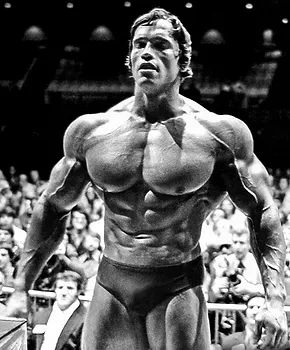
"Bodybuilding is about training muscles, not lifting weights". I think this was said by Arnold. It is a concept that is very misunderstood when you look at the way the average gym goer trains. I don't spend all that often in public gyms but when I do I always walk away scratching my head with some of the things I see. The technique is horrible and people are increasing their risk of injury instead of improving performance and making gains. When you consider most of the people training there just want to look good, or are want to be bodybuilders, then I think they should be focusing on creating as much tension as possible in the working muscles than they currently do.

When doing isolation work, instead of using so much momentum and bringing many muscle groups into play to lift a given weight, you should be focusing on contracting the muscle as hard as possible. You want to make the lift harder, not easier. You can overload a muscle using the same weight each workout as long as you created more tension and contracted it harder from workout 1 to workout 2 for example. You want the target muscle to be doing all the work hence the term "isolation". If you use body motion and momentum to move the weight then you aren't isolating and muscle group. Sure certain muscle groups will fire to support the working muscle but you want to minimise this as much as possible. 

You must also focusing on contracting the target muscle group first. What ever you contract first gets the most stimulus. So if doing curls, you must focus on contracting the biceps first and not the shoulders as is commonly seen. 

Use weights that aren't too heavy to feel the target muscle. This is one of if not the biggest reasons people are unable to feel certain muscle groups when training them. If the weight is too heavy for the muscle you are targeting then other muscle groups are going to kick in to help you lift the weight. As an example, when I do face pulls or a seated row variation, there is a point in which the weight is heavy enough for me to really feel the contraction of my scapula retractors but if i go just slightly over that point I lose the feeling of contraction in those muscles, even though my technique still looks good and I can lift the weight quite comfortably. 

When training isolation exercises or trying to bring up a weak point, tension is the key. If you learn to contract those muscles more efficiently then they will be able to support you during your bigger lifts. It isn't just about moving the weight from point A to point B when bringing up a weak muscle group. You have to focus hard on the target muscle and try to get it to do the majority of the work. Focus on keeping constant tension in that muscle group for the whole set and you will feel a very big difference. You are basically flexing against a resistance. To do this you will have to lift more slowly as too much acceleration will make you lose tension in the muscle. Maybe use a 3131 type tempo when doing a regular biceps curl for example. The transition point is also where a lot of people lose tension so that is why I think it is important to pause at each point the first few sessions you do.

So it doesn't really matter what your goal is. If you just want to look good and are doing some isolation work or if you are an athlete trying to bring up a weak point, you have to focus on creating as much tension, and contracting the target muscle as hard as possible.

Tuesday, 20 March 2018

Need For Speed

Need For Speed

March 20, 2015
To increase speed you’ll see trainers have their athletes do ladder drills and run over hurdles. I believe this is a total waste of time. You would be much better off working with a strength coach who knows how to get athletes fast.

My athletes are always amazed at how much their speed improves when we don’t perform a single “speed” session on the field. We don’t have a sprint training program. All the work I do with them is in the gym.

Below are some of the things I work on with my athletes to increase speed.

FMS & Structural Balance

The way we go about increasing speed in our athletes is to first of all work on any structural imbalances. To do this we run the FMS and structural balance assessment which allows us to see where the athlete is weak, tight, what their strength deficit is, and much more, plus it allows us to orientate the training program to ensure optimal performance. Year round specialization tends to lead to muscle imbalances and in the general preparation period we work to correct these issues to decrease the risk of injury. If we find a weak VMO for example, we know that this can affect running mechanics, and can also lead to loss of force being applied into the ground, so by strengthening the VMO we can in turn increase running speed. For more information you can read the FMS and structural balance testing articles.

Relative Strength

You need to be strong to have a fast start. Being strong will help you overcome inertia.
One reason for the increase in running speed by getting stronger is that you will be able to apply more force into the ground; most people believe that you need to be able to swing the arms and legs faster. The fact is that while you sprint your muscles need to be able to support more than five times your body weight.

Another thing to consider is muscle mass. Generally, any increase in muscle mass will make an athlete faster. While many of my athletes want to put on muscle mass it is important that this added size is functional. By that I mean if they gain 5 kg on a hypertrophy style program but don’t gain any strength then the extra weight gained is pointless as it will not correlate with increased sports performance. On the other hand if you use the correct training methods that recruit the high-threshold fibers the gains in muscle mass will make an athlete faster because these fibers contribute to speed.

Another important point on muscle mass gains is that if you gain muscle mass too quickly, even if it’s with the right type of training, you could decrease performance at first. Due to the heavier bodyweight and change in mechanics your timing may be off and it can take some time to get used to this new found muscle. The way to go about increasing size optimally is to focus on hypertrophy methods early in the off season to have time to adapt to the changes in body structure or even better it is best to work on the increase in size earlier in the athlete’s career, focusing more on relative strength later on.  

Exercise Selection

With all my athletes I use full range of motion free weight exercises. Too often I see athletes focus on exercises such as the leg press and leg extension. These exercises do not carry over to the playing field as well as snatch grip deadlifts on a podium or full squats for example. Machine based work should only be used around 20 percent of the time.

I also like to use complex training, combining traditional exercises with plyometric exercises, rather than doing plyometrics as a stand-alone method. It has been shown that complex training is a great method to increase neuromuscular efficiency through a training effect called post-activation potentiation.

I do zero so called “functional training”. Balancing on a bosu ball and doing squats doesn’t recruit any more muscles than doing regular squats. The reason why stability exercises are a poorer choice is because you have to use less weight.

Decreasing Body Fat

With all of my clients I start by doing their BioPrint. This gives me an insight into their hormonal profile and allows me to design a tailored nutrition, lifestyle, and supplementation plan. For more information you can read this article on BioPrint.

When an athlete gets leaner they increase speed because they aren’t wasting energy carry around an extra 5kg of fat. Fat doesn’t contract and it doesn’t help you run fast. If you want to test this out try carrying 5kg and running a 40m sprint. Compare that to your normal sprint time and you’ll see a pretty big change in time.

This drop in weight isn’t a loss of muscle mass. In fact my athletes drop body fat while increasing their lean body mass. This is important because as we spoke about above, an increase in muscle mass is generally related to an increase in speed.
The advice given by most trainers and dieticians won’t cut it. Calorie restriction will lead to a loss of muscle mass and aerobic exercise which most trainers recommend to lose fat will train the slow twitch fibers and make the fast twitch fibers behave like slow twitch fibers, in turn decreasing speed.

There are many other ways to increase speed. These are just some of the things I do to help my athletes increase their speed and performance on the field. If you want to increase your speed, please feel free to come and train with me or get your program designed and put these methods to the test.